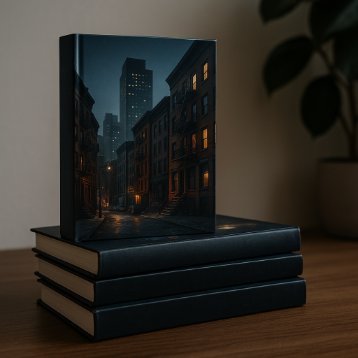
Urban fiction books have never been static. What began as a hard-edged form of storytelling rooted in city life, social pressure, survival, and ambition has grown into a broader literary category with a distinct voice and a fiercely loyal readership. Across decades, the genre has reflected changing neighborhoods, shifting cultural conversations, and evolving ideas about authenticity, morality, family, gender, and power. To understand its endurance, it helps to look beyond labels and see urban fiction as a living record of how people write about place, struggle, aspiration, and identity.
The Roots of Urban Fiction Books
The foundations of urban fiction books lie in stories that treated the city as more than a backdrop. Urban life brought density, urgency, conflict, and movement, and writers used those conditions to build fiction that felt immediate and unsentimental. These novels often centered characters navigating poverty, violence, hustling, fractured institutions, and unstable family structures, but they also carried humor, intimacy, loyalty, and sharp observations about class and race.
In its earlier recognizable forms, the genre developed a reputation for raw realism. Readers were drawn to voices that sounded close to lived experience rather than polished for elite literary approval. That closeness mattered. It gave urban fiction a different energy from mainstream commercial fiction and a different texture from academic literary fiction. The appeal was not simply grit for its own sake. It was the sense that the stories knew the codes of neighborhoods, the rhythms of speech, and the emotional stakes of survival.
Even at this stage, the genre was often misunderstood. Critics sometimes reduced it to sensational material, overlooking the fact that urban fiction has long explored structural limits as much as personal choices. Beneath the fast pacing and dramatic turns, many of these books asked enduring questions: What does ambition look like when legitimate paths feel blocked? How do love and trust function in unstable environments? What happens when loyalty to a person conflicts with loyalty to self-preservation?
From Street Lit to a Recognized Genre
One of the most important developments in the evolution of urban fiction books was the rise of street lit as a visible publishing force. For many readers, this period defined the genre’s public identity. These novels were often direct, fast-moving, dialogue-rich, and rooted in the consequences of street economies. They circulated strongly through independent channels, local booksellers, word of mouth, and readers who recommended titles within their own communities.
That independent energy mattered because it allowed the genre to grow outside traditional gatekeeping. Writers did not need to wait for full institutional approval to reach an audience. Instead, they built readership through relevance, voice, and immediacy. This helped urban fiction develop a strong reader-writer relationship that still shapes the genre today.
Several factors made this phase especially influential:
- Accessibility: The language and pacing welcomed readers who wanted fiction that felt immediate and emotionally legible.
- Community circulation: Books spread through personal recommendation, neighborhood retail, and reader loyalty.
- Distinct perspective: The stories centered experiences often marginalized in mainstream publishing.
- Cultural crossover: The genre drew energy from broader urban culture, including music, fashion, and street language.
As interest grew, publishers and booksellers began to recognize that urban fiction was not a passing niche. It had a durable audience and a recognizable identity. That recognition did not erase debates about quality, representation, or literary value, but it did solidify the genre’s place in the broader reading landscape.
How Style, Themes, and Characterization Expanded
Over time, urban fiction books widened in scope. While crime, hustling, betrayal, and revenge remained familiar elements, the genre became less confined to one kind of plot. Writers started to push further into psychological depth, intergenerational conflict, romance, motherhood, trauma, ambition, incarceration, gentrification, and the tension between neighborhood loyalty and personal reinvention.
This expansion changed not only what stories were told, but how they were told. The earliest stereotype of urban fiction as relentlessly plot-driven no longer captures the full picture. Many contemporary works retain the urgency that defines the genre while developing richer emotional interiors and more layered moral questions.
| Phase | Common Focus | Stylistic Traits | What Changed Over Time |
|---|---|---|---|
| Early urban narratives | City survival, social pressure, street reality | Direct voice, realism, strong sense of place | Established the city as a central force in character development |
| Street lit boom | Fast stakes, crime economies, betrayal, ambition | Rapid pacing, vivid dialogue, cliffhangers | Built a mass readership and strengthened independent publishing paths |
| Contemporary expansion | Family, trauma, mobility, gender, identity, reinvention | Broader tonal range, deeper characterization, blended forms | Moved the genre beyond a single formula or stereotype |
Another major shift has been the treatment of women in the genre. Female characters have long been central to urban fiction, but more recent work often grants them greater complexity as narrators, strategists, caregivers, entrepreneurs, and agents of their own contradictions. The same is true of family dynamics. Where earlier stories sometimes used family mainly as pressure or backstory, later works often place kinship, generational damage, and emotional inheritance at the center of the plot.
In practical terms, this means readers now encounter a wider range of books under the urban fiction umbrella. A novel may still be tense and streetwise, but it may also be reflective, romantic, domestic, or politically aware in ways that earlier shorthand descriptions of the genre did not fully acknowledge.
Publishing Shifts and the Broadening of Readership
The evolution of urban fiction books cannot be separated from the ways they have been published, sold, and discussed. Independent publishing played an essential role in helping the genre take shape, but wider distribution and digital discovery have changed the reading experience. Readers can now find both classic street-driven novels and newer works that blur boundaries between urban fiction, romance, family drama, suspense, and literary fiction.
That broader availability has had two major effects. First, it has exposed the genre to readers who may not have encountered it through traditional local networks. Second, it has made the category more visibly diverse. Readers exploring current catalogs of urban fiction books can quickly see that the genre now includes more tonal variety, more women-centered narratives, and more stories concerned with emotional aftermath rather than only immediate action.
As readership widened, conversation around the genre matured as well. Instead of asking whether urban fiction deserves literary attention, more serious readers now ask better questions:
- What social conditions does the story illuminate?
- How does the novel use voice and place to build credibility?
- What moral tensions drive the characters?
- How does the book balance momentum with emotional depth?
- What version of the city does it imagine or critique?
These questions reflect a healthier way to engage the genre. Urban fiction does not need to be defended by pretending it is something else. Its value lies in what it does particularly well: capturing pressure, movement, contradiction, and desire in environments where every decision can carry outsized consequences.
What the Future of Urban Fiction Books Suggests
Today, urban fiction books sit in a more flexible and interesting position than ever before. The genre still honors its roots in realism, immediacy, and neighborhood-specific storytelling, but it is no longer defined by a narrow set of expectations. Writers have room to experiment with structure, voice, time frame, and emotional register while remaining grounded in urban life.
Several qualities are likely to shape the genre going forward:
- Greater hybridity: More books will continue blending urban fiction with romance, mystery, family saga, and literary drama.
- Sharper social context: Stories about housing, policing, class mobility, and displacement will likely deepen the genre’s engagement with structural change.
- Expanded character range: Readers increasingly expect complex protagonists rather than archetypes.
- Stronger generational perspective: The effects of past choices on children, siblings, and communities are becoming more central to the form.
What should not change is the genre’s essential commitment to recognizable stakes. Urban fiction is strongest when it refuses distance. It puts readers close to the consequences of hunger, love, vanity, fear, pride, and ambition. It asks them to inhabit lives shaped by pressure without flattening those lives into symbols.
That is why the best urban fiction books remain so compelling over time. They evolve with the city, but they also preserve what made the genre matter in the first place: a willingness to tell stories that feel immediate, intimate, and unguarded. From its gritty beginnings to its broader contemporary form, urban fiction has proven that literary value is not determined by who first validates a genre, but by whether readers continue to find truth, urgency, and human complexity in its pages.
In the end, the evolution of urban fiction books is not a story of leaving the past behind. It is a story of expansion. The genre has kept its edge while gaining range, and that balance is precisely what gives it lasting power.
For more information visit:
Urban Storytelling | Down & Dirty Publishing LLC
https://www.down-dirty-publishing.com/
Des Moines (Easton Place) – Iowa, United States